A Defensive OSINT Triage Framework for Security Incidents
A bounded way to use public information during a security incident: prioritize context, avoid risky validation, preserve evidence, and escalate responsibly.
During an incident, public information can supply useful context: an impersonation page may be visible, a leaked-looking screenshot may be circulating, or a fraudulent support account may be contacting customers. The pressure to move quickly can also create harmful shortcuts. Defensive OSINT triage should reduce uncertainty for responders, not turn into broad collection or active probing.
First establish the incident question
Start with one operational question: Is there a public impersonation page? Is an alleged company document genuinely public? Are customers being directed to an unauthorized support channel? Name the organization, approved assets, and time window. This prevents the team from collecting unrelated personal data while trying to help.
Record the report source separately from the evidence. A report can be valuable enough to trigger triage even when it does not prove the claim. Preserve the original report through the incident process; do not overwrite it with later assumptions.

Use a simple priority model
| Factor | Question | Defensive response |
|---|---|---|
| Relevance | Does the page concern an approved asset, user, or brand? | Document the direct source; discard unrelated leads. |
| Potential impact | Could it mislead customers, expose a secret, or affect operations? | Escalate to the incident owner with evidence and limits. |
| Freshness | Is the material current or historic? | State the observed time and avoid treating old content as active. |
| Confidence | Is this direct observation or a claim about one? | Use calibrated wording and seek only necessary corroboration. |
Collect context without testing the threat
Safe collection usually means recording a public URL, visible account name, publication time, relevant screenshot, and a brief description of the claimed relationship to your organization. Do not try passwords, submit forms, download suspicious files, interact with a suspected scammer, or test whether a leaked credential works. Those actions can damage evidence, create risk, or exceed the authority of the responder.
If a public page appears to contain sensitive material, capture the minimum necessary proof and use the organization's security or legal escalation path. Avoid reproducing the material in chat rooms, tickets, or reports where more people can see it.
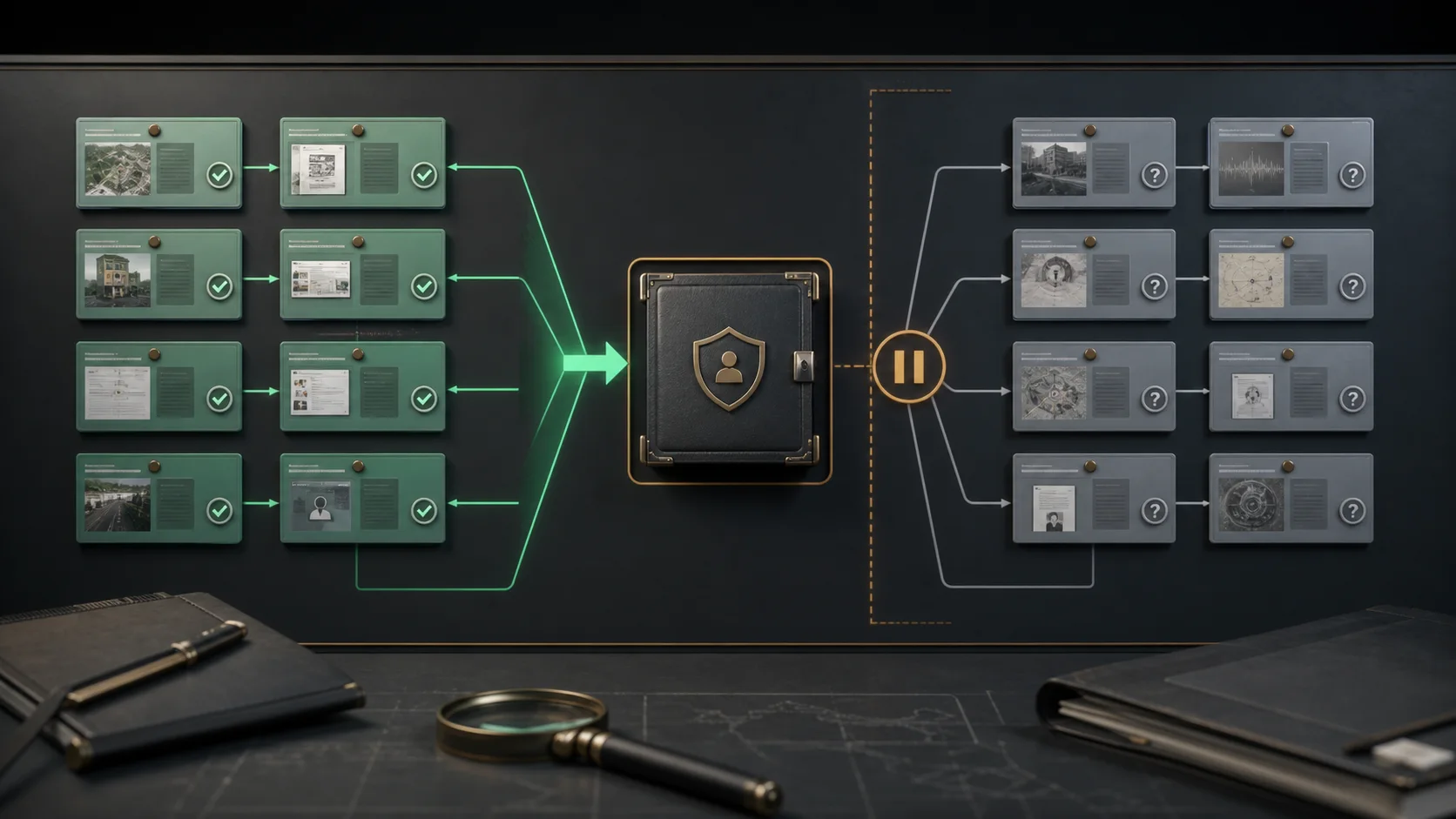
Write an incident-ready finding
A triage note should be short enough to act on. Include the question, direct source, observation time, what the source visibly shows, confidence, potential impact, and recommended owner. Separate observations from interpretation. For example: “A public page using the company name linked to an unrelated support address at 14:20 UTC” is stronger than “this is a scam operation” unless the incident team has further evidence.
Close the loop
Once the appropriate owner receives the finding, record the handoff and retention decision. Remove duplicated local notes. If the result was a false positive, retain only what policy requires and document why it was closed; that record can prevent the same noisy lead from consuming time again.
Defensive OSINT is valuable because it provides public context quickly. It remains safe and credible when it stays proportionate, avoids active validation, and keeps response authority with the incident process.
// USEFUL_INTEL?
Signal that this research note was useful.