How to Detect Misleading Screenshots and Cropped Claims
A source-first verification method for checking screenshot claims, restoring missing context, and reporting uncertainty without amplifying misinformation.
Screenshots travel fast because they appear self-contained. A cropped image can remove the author, time, reply chain, source address, or qualifiers that change the meaning of a claim. It can also be edited, taken from an unrelated page, or capture a transient state. A careful OSINT workflow treats a screenshot as a lead that needs a public source and context.
Ask what the screenshot does not show
Before searching, inventory the visible clues: platform layout, account name, time display, image edges, link preview, reply indicators, and any cropped regions. Then list the missing context: direct URL, full post, account status, publication time zone, edit history, and whether the image is the original. This turns a vague feeling that something is off into a clear verification plan.
Do not assume a familiar interface proves a screenshot is genuine. Layouts change, images can be mocked up, and screenshots of real posts can be paired with false captions. The question is not whether the pixels look persuasive; it is whether a reliable source supports the specific claim being made.
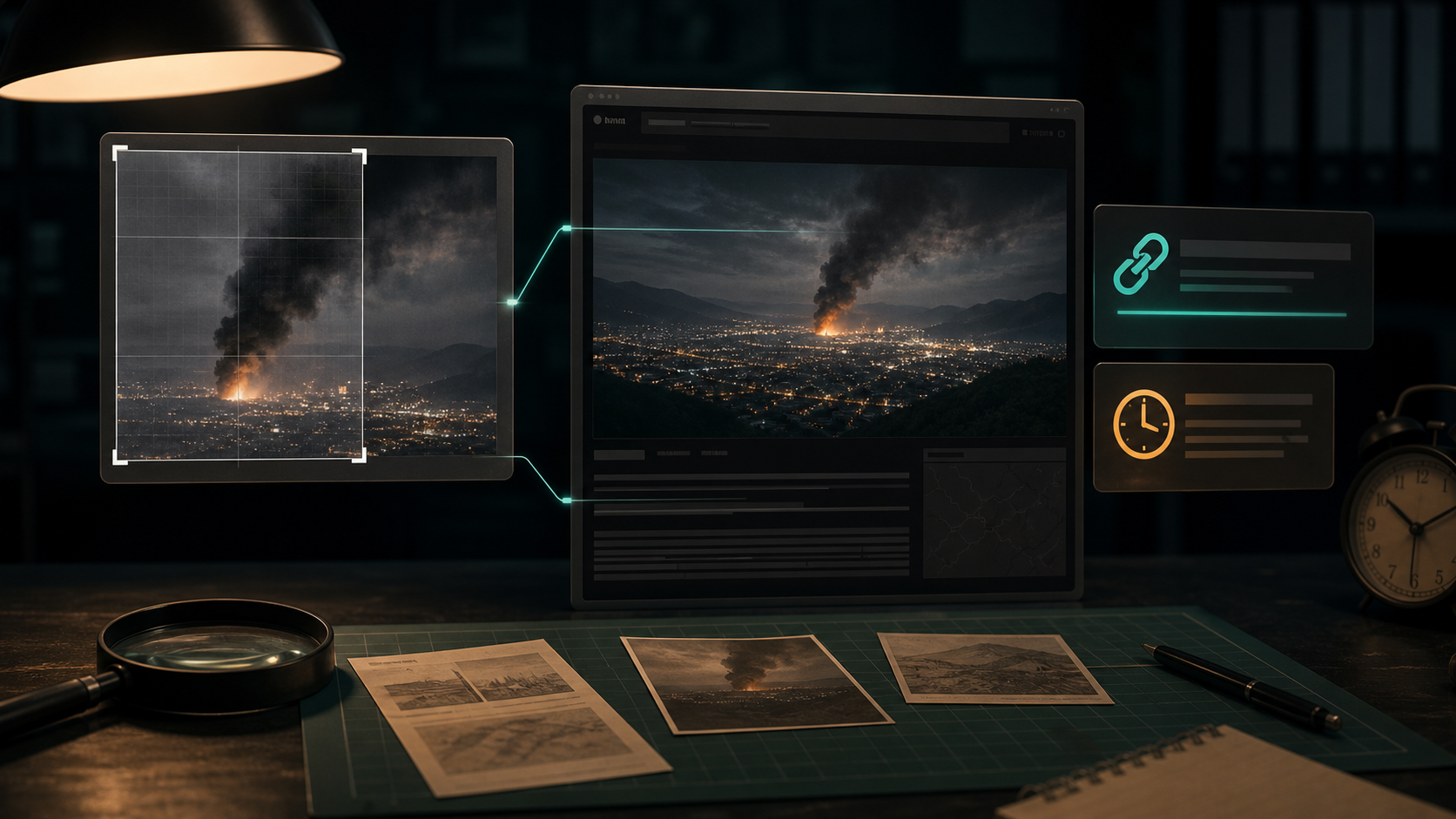
Recover the source through public references
Use distinctive visible phrases, account handles, image search, official websites, and platform search to look for the original public item. If a tool such as SpiderFoot.tools helps surface a domain or account reference, follow the direct source and record the route. Do not bypass access controls, create deceptive accounts, or treat cached snippets as a substitute for the original page.
| Check | What it can establish | What it cannot establish alone |
|---|---|---|
| Direct source URL | Where the material was publicly hosted at the observation time | That every surrounding claim is true |
| Full thread or page | Replies, qualifiers, updates, and attribution context | Private intent or off-platform events |
| Publication and observation times | Whether the screenshot may be old or out of sequence | The exact time an image was captured |
Compare context, not just image similarity
Once a candidate source is found, compare the username, page address, visible wording, media, time indicators, and surrounding content. Look for disconfirming context such as a correction, satire label, later update, or an earlier version. A match may show that a screenshot originated from a real page while the caption attached to it remains misleading.
Use neutral language in notes. Write “the supplied screenshot appears consistent with a public post observed at this URL on this date” rather than “the screenshot proves the event happened.” The first is an evidence statement; the second may exceed what the source can support.
Use independent confirmation for consequential claims
When a screenshot is used to support a safety, financial, political, or reputational claim, look for independent current sources. Official statements, primary documents, direct reporting, or multiple independent witnesses may add context. Sources that merely repost the same screenshot do not create independent confirmation.

Report the result without creating more harm
A useful output includes the supplied item, source search result, what was confirmed, what remains uncertain, and a recommendation. If no original source is found, say so. Do not publish the unverified image more widely in an attempt to debunk it; repeated sharing can increase its reach. Route high-risk content to the appropriate platform, communications, legal, or safety owner.
Screenshot verification is disciplined context recovery. The most valuable conclusion is sometimes that the public evidence is incomplete and the claim should remain paused.
// USEFUL_INTEL?
Signal that this research note was useful.