Understanding Public Metadata: What It Reveals and How to Handle It
A privacy-aware guide to understanding the contextual data attached to public files and images, with emphasis on verification, minimization, and safe handling.
Metadata is data about data. A public image, document, or web page can carry context beyond its visible content: a publication time, file type, revision clue, device category, location reference, or source path. Sometimes that context is useful for a self-audit or an authorized investigation. Often it is incomplete, stripped by a platform, or misleading. Treat metadata as context to assess, not as a shortcut to certainty.
Know what metadata can and cannot show
Possible fields include creation and modification times, software names, document authorship, camera or device information, file dimensions, and sometimes location data. The presence of a field does not prove it is accurate, current, or original. Files are copied, exported, edited, and passed through platforms that can remove or alter metadata.
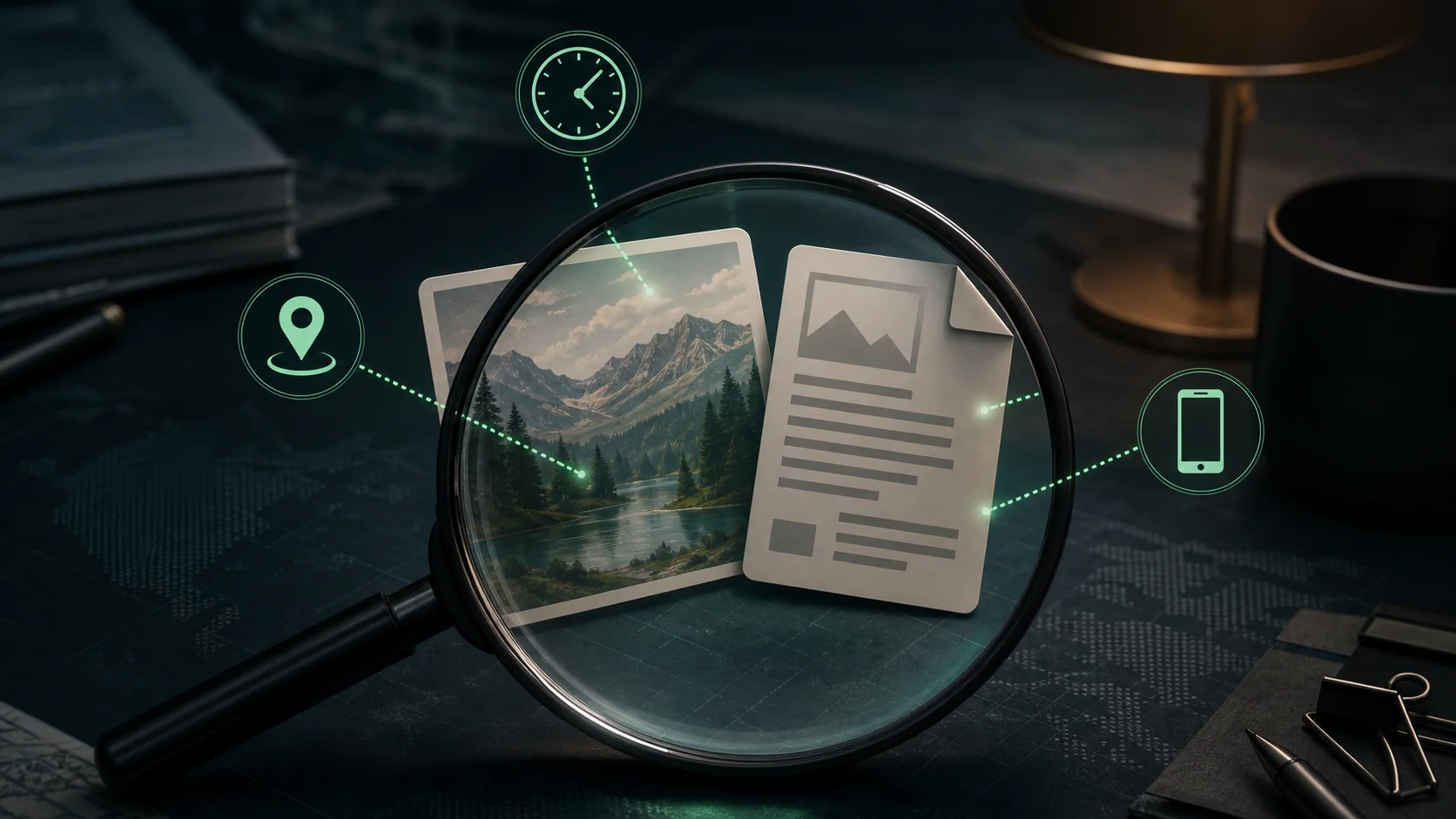
Separate content from context
| Field type | Possible use | Key limitation |
|---|---|---|
| Creation or modification time | Build a tentative timeline. | May reflect export, copy, timezone, or system clock behavior. |
| Software or device field | Understand how a file may have been produced. | Can be removed, changed, or shared by many users. |
| Location-related field | Identify a privacy question for the authorized owner. | May be absent, approximate, stale, or sensitive to retain. |
| Document properties | Spot possible revision or ownership context. | Does not establish the real-world author or approval status. |
Preserve provenance before interpretation
Record where the file came from, when it was obtained, and what transformations occurred. Viewing, downloading, re-exporting, or taking a screenshot can change the available context. If a matter requires evidentiary handling, follow the organization's approved preservation procedure rather than relying on an informal local copy.
For a personal privacy review, the safer question is often “what context do my public uploads reveal?” Review files you own, compare platform privacy settings, and choose whether to remove location data or publish a reduced copy. Do not attempt to extract context from other people's public posts for curiosity.

Minimize, secure, and delete
Metadata can be sensitive even when the visible file is harmless. Limit access, avoid pasting sensitive fields into broad collaboration channels, and set a retention period. When a finding is handed to the appropriate owner, remove duplicate copies. If no action is needed, close the review according to policy instead of keeping an open-ended archive.
Responsible metadata work is less about extracting every possible field and more about understanding the context already attached to authorized material. That approach improves privacy and produces evidence that is easier to explain and defend.
// USEFUL_INTEL?
Signal that this research note was useful.