How to Verify Images and Videos Without Overclaiming
A disciplined method for assessing public images and videos: trace source, check context, seek independence, and preserve what remains unknown.
A compelling image or video invites a quick conclusion. Verification requires the opposite habit: separate what the media visibly shows from claims about where, when, and why it was created. A file can be authentic but old, correctly located but wrongly captioned, or widely shared from one original unverified source.
Start with the earliest available source
Look for the direct public post, publication date, original account context, and links that identify where the media came from. A repost is evidence that the material circulated; it is not automatically evidence of its origin. Search snippets and detached screenshots are weaker than a source page that can be assessed in context.
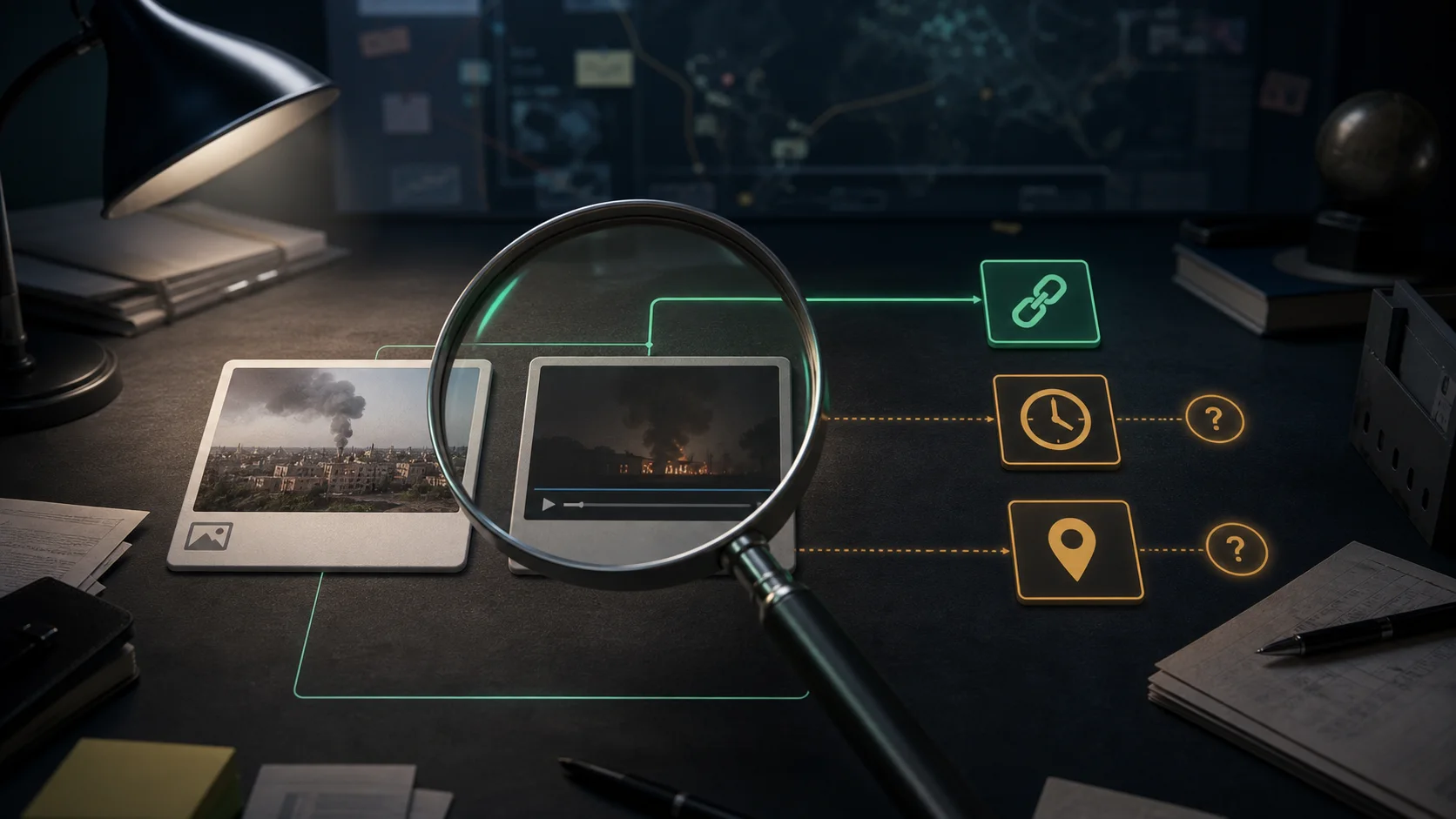
Test each claim separately
| Claim | What can support it | Common limitation |
|---|---|---|
| The media exists publicly. | Direct source URL and observation time. | The page may later change or disappear. |
| The media is recent. | Contemporaneous context and independent timing clues. | Upload time is not always capture time. |
| The caption is accurate. | Independent, relevant corroboration. | Reposts may share one original error. |
Seek independent corroboration
Compare context from different source types and ask whether they are genuinely independent. Multiple accounts copying the same post do not create multiple confirmations. If relevant, describe alternatives: a scene could be historic, an image could be illustrative, or a location claim may be unresolved.
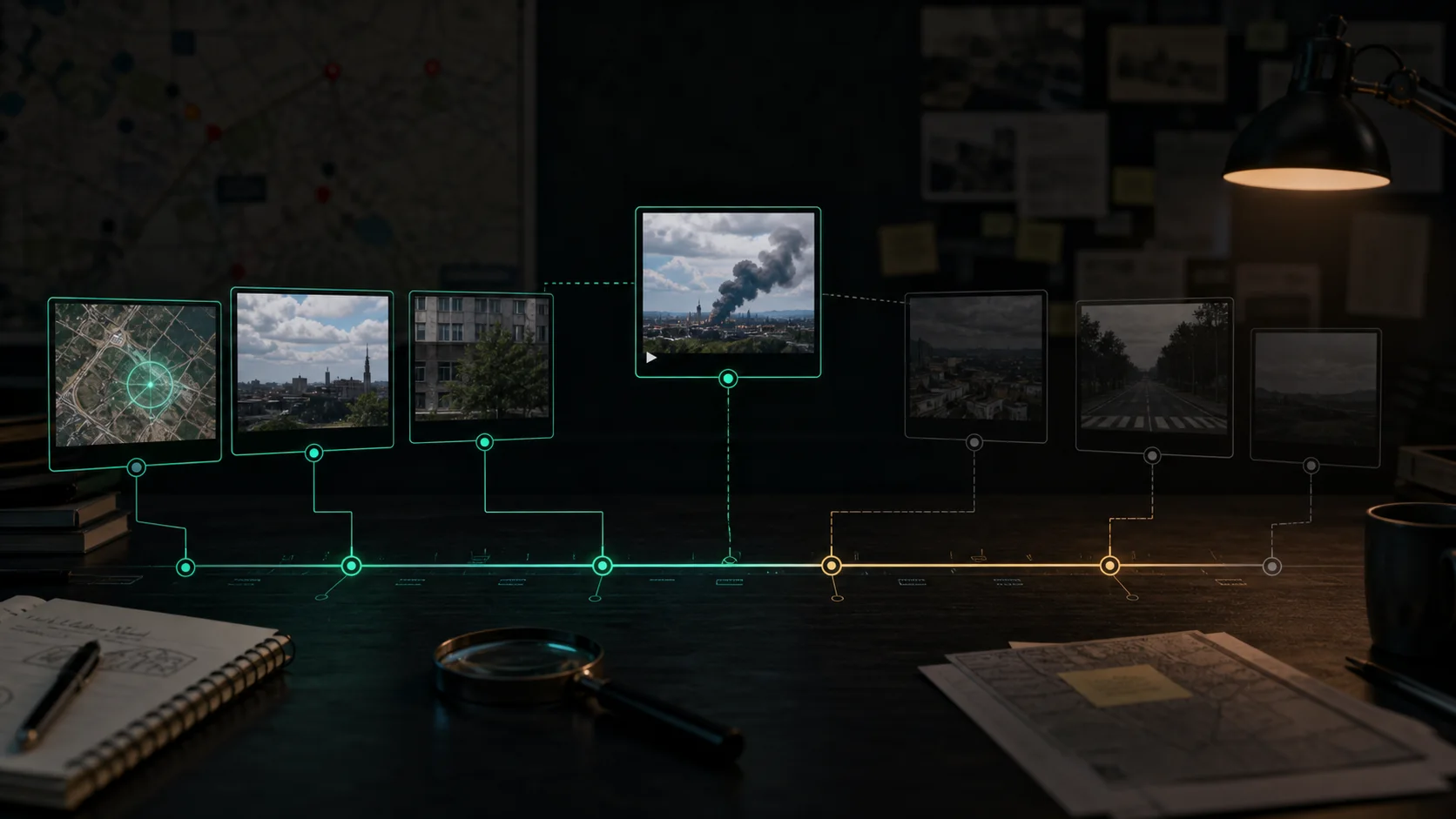
Report calibrated conclusions
Use language such as “the public source displayed,” “context is consistent with,” or “location remains unconfirmed.” Preserve direct links, dates, and confidence reasoning. The purpose is a reviewable record that does not transform a plausible lead into an unsupported narrative.
// USEFUL_INTEL?
Signal that this research note was useful.